
Leadership has become a buzzword word in business and public life. Yet despite the endless conversations about it, genuine leadership remains in short supply. Across organisations and institutions, we continue to witness a crisis of credibility, where leaders preach values, they fail to practice.
Why does this happen? Many people aspire to leadership positions but overlook the discipline that true leadership demands. Effective leadership is not defined by titles, speeches, or authority. It is defined by consistency in values, behaviour, and character, both in professional and public life.
Influence
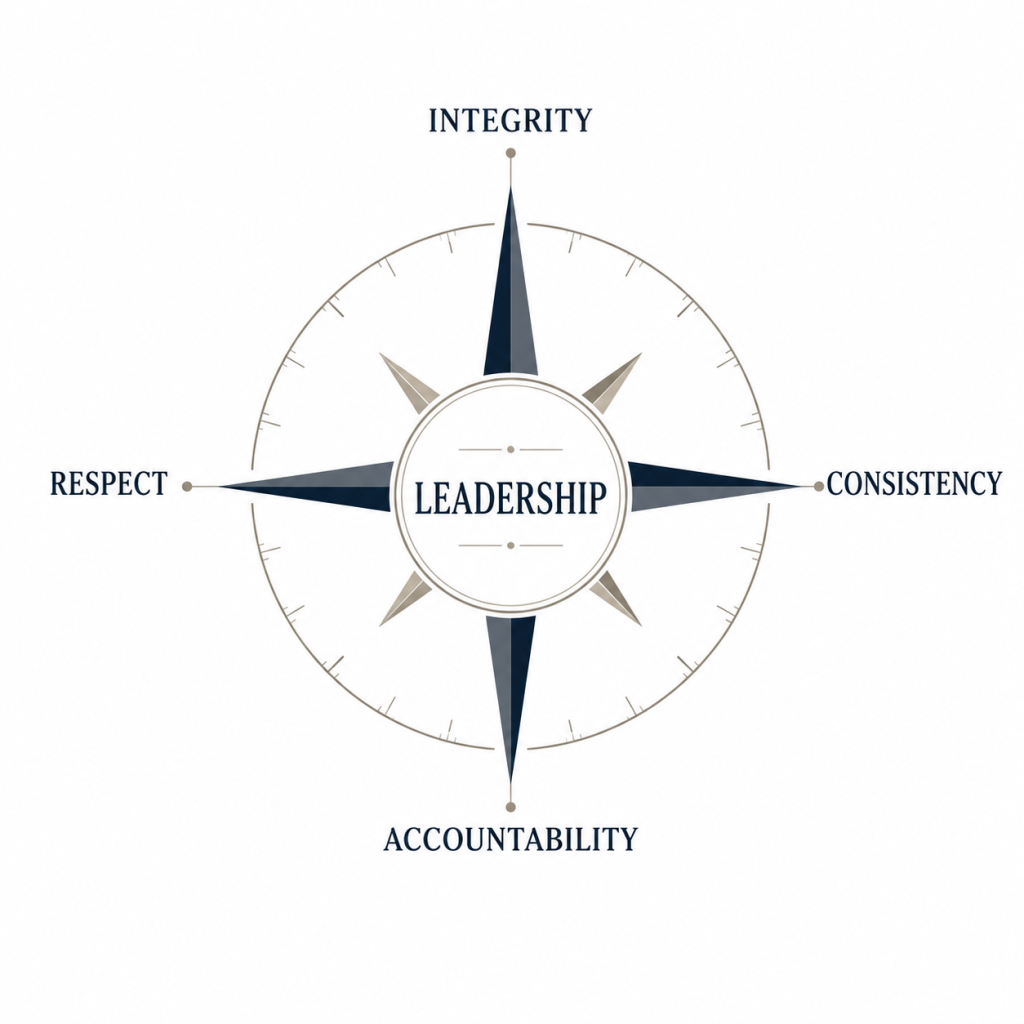
At its core, leadership is about influence. Leaders are responsible not only for setting direction and making decisions but also for shaping organisational culture. Culture is built less through policies and more through everyday actions that signal what is truly valued. When leaders demonstrate true integrity, accountability, and respect, they establish a standard for others to follow. When these values are absent from their conduct, credibility suffers. Once credibility is lost, influence begins to erode.
Changing culture requires more than verbal commitment. It demands alignment between what leaders say and what they do. Employees and stakeholders pay close attention to how leaders behave, not only during official engagements but also in ordinary interactions.
These observations shape perceptions of authenticity and trustworthiness.
Consider the workplace. A leader who advocates teamwork and respect should extend the same courtesy to every employee, regardless of rank. Such consistency reinforces a culture of dignity and mutual respect because employees see the leader living the values they promote.

The opposite is equally true. A leader may frequently speak about accountability and punctuality yet consistently arrive late for meetings, miss deadlines, or avoid responsibility when mistakes occur. In reality, employees often recognise these contradictions. Over time, trust diminishes and the leader’s message loses its power.
The same principle applies outside the workplace. A leader who promotes integrity and respect should demonstrate those values in public settings. Whether interacting with service workers, security personnel, or members of the public, respectful conduct strengthens credibility because it reflects alignment between words and actions.
Conversely, leaders who preach professionalism and ethical conduct but display abusive, reckless, or disrespectful behaviour in public quickly undermine their own authority. Such actions raise questions about the sincerity of the values they claim to uphold.

Leadership does not require perfection, nor does it deny leaders a private life. What it demands is consistency in core values and public conduct. Leaders who understand this are better positioned to inspire trust, earn respect, and drive lasting change.
Ultimately, leadership by example is not situational; it is continuous. The most effective leaders understand that their influence extends beyond titles and workplaces, and they embrace the responsibility that comes with it. So, in leadership, stop telling us stories. Rise to the occasion, above board, let’s see your actions.
Dr. Ogutu is the Ag. Manager, Geothermal Resource Centre at GDC
Download your copy of the Steam Magazine Issue 18 here: https://www.gdc.co.ke/wp-content/uploads/2026/06/Steam-Magazine-Issue-18.pdf