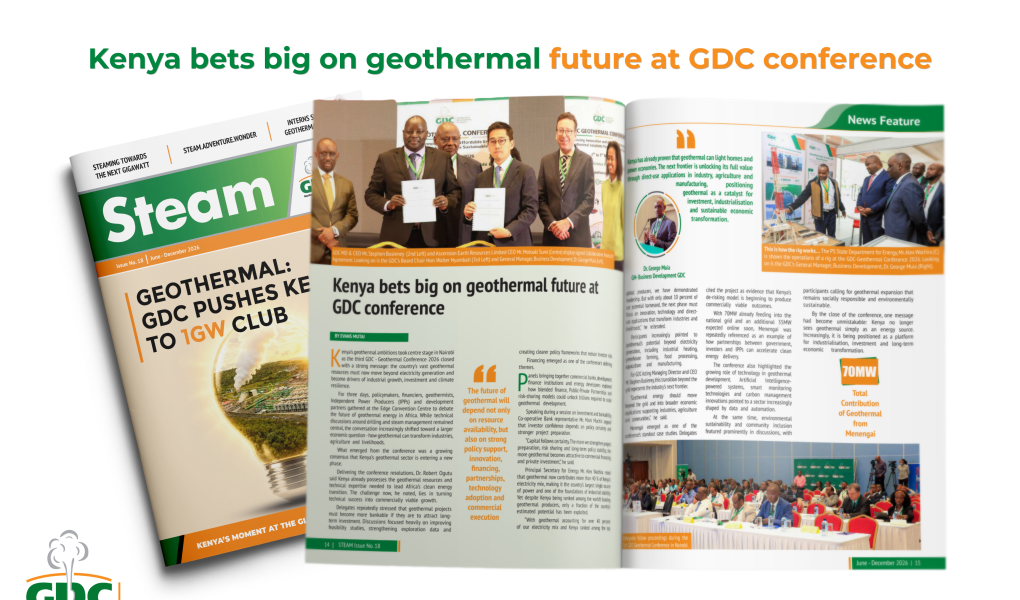
Kenya’s geothermal ambitions took centre stage in Nairobi as the third GDC – Geothermal Conference 2026 closed with a strong message: the country’s vast geothermal resources must now move beyond electricity generation and become drivers of industrial growth, investment and climate resilience.
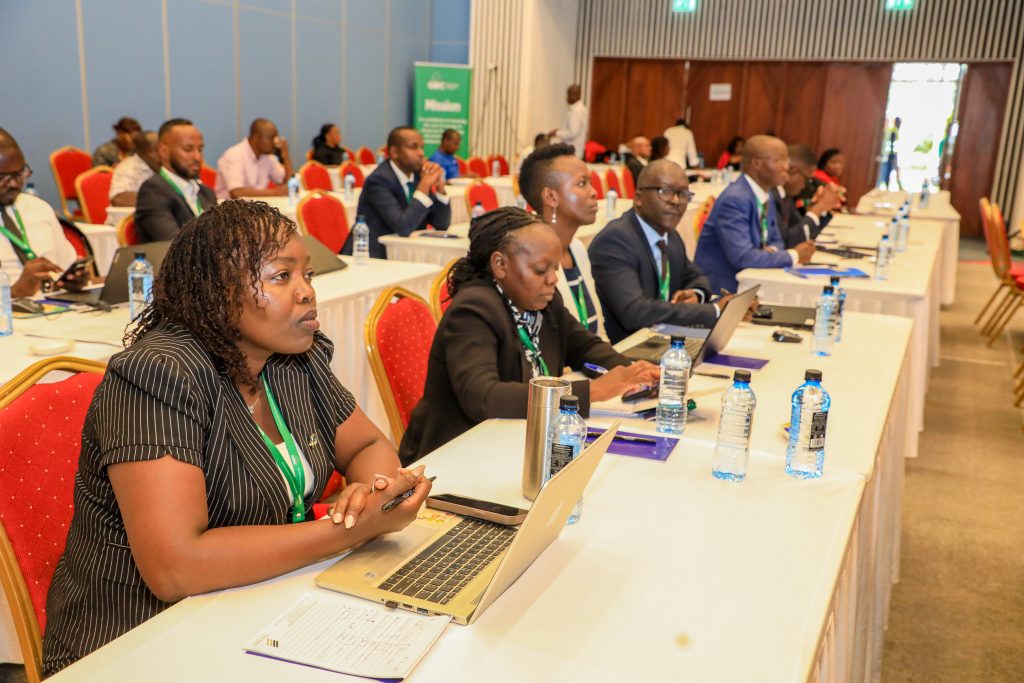
For three days, policymakers, financiers, geothermists, Independent Power Producers (IPPs) and development partners gathered at the Edge Convention Centre to debate the future of geothermal energy in Africa. While technical discussions around drilling and steam management remained central, the conversation increasingly shifted toward a larger economic question – how geothermal can transform industries, agriculture and livelihoods.
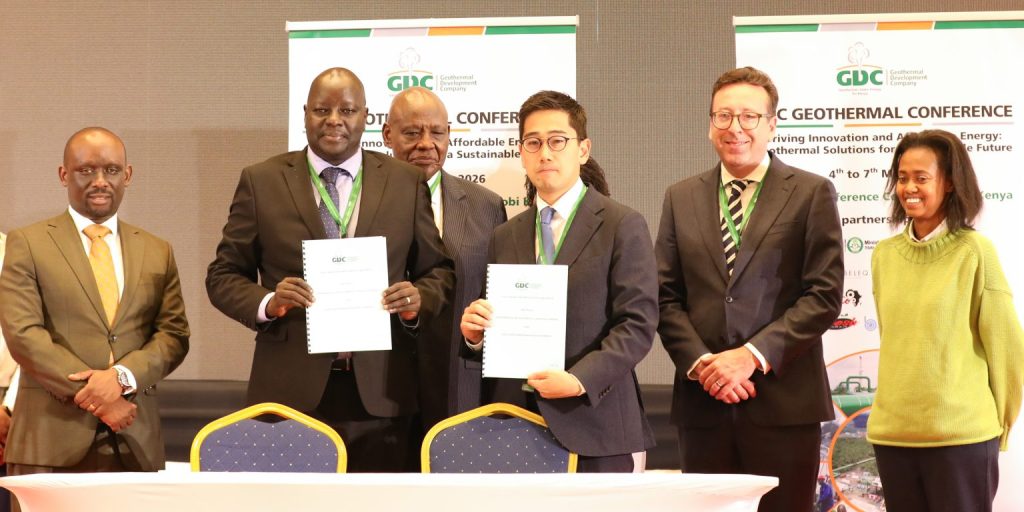
What emerged from the conference was a growing consensus that Kenya’s geothermal sector is entering a new phase.
Delivering the conference resolutions, Dr. Robert Ogutu said Kenya already possesses the geothermal resources and technical expertise needed to lead Africa’s clean energy transition. The challenge now, he noted, lies in turning technical success into commercially viable growth.
Delegates repeatedly stressed that geothermal projects must become more bankable if they are to attract long term investment. Discussions focused heavily on improving feasibility studies, strengthening exploration data and creating clearer policy frameworks that reduce investor risk.
Financing emerged as one of the conference’s defining themes.
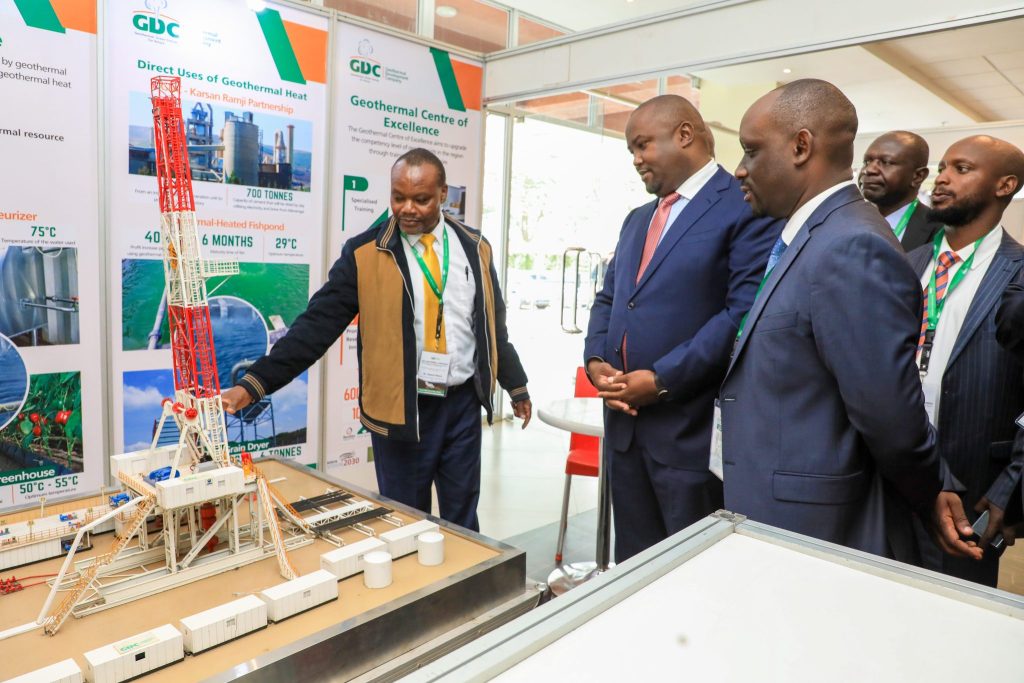
Panels bringing together commercial banks, development finance institutions and energy developers explored how blended finance, Public-Private Partnerships and risk-sharing models could unlock billions required to scale geothermal development.
Speaking during a session on investment and bankability, Co-operative Bank representative Mr. Mark Muchiri argued that investor confidence depends on policy certainty and stronger project preparation.
“Capital follows certainty. The more we strengthen project preparation, risk sharing and long-term policy stability, the more geothermal becomes attractive to commercial financing and private investment,” he said.
Principal Secretary for Energy Mr. Alex Wachira noted that geothermal now contributes more than 40 % of Kenya’s electricity mix, making it the country’s largest single source of power and one of the foundations of industrial stability. Yet despite Kenya being ranked among the world’s leading geothermal producers, only a fraction of the country’s estimated potential has been exploited.
“With geothermal accounting for over 40 percent of our electricity mix and Kenya ranked among the top global producers, we have demonstrated leadership. But with only about 10 percent of our potential harnessed, the next phase must focus on innovation, technology and direct use applications that transform industries and livelihoods,” he reiterated.
Participants increasingly pointed to geothermal’s potential beyond electricity generation, including industrial heating, greenhouse farming, food processing, aquaculture and manufacturing.
For GDC Acting Managing Director and CEO Mr. Stephen Busieney, this transition beyond the grid represents the industry’s next frontier.
“Geothermal energy should move beyond the grid and into broader economic applications supporting industries, agriculture and communities,” he said.
Menengai emerged as one of the conference’s standout case studies. Delegates cited the project as evidence that Kenya’s de-risking model is beginning to produce commercially viable outcomes.
With 70MW already feeding into the national grid and an additional 35MW expected online soon, Menengai was repeatedly referenced as an example of how partnerships between government, investors and IPPs can accelerate clean energy delivery.
The conference also highlighted the growing role of technology in geothermal development. Artificial Intelligence powered systems, smart monitoring technologies and carbon management innovations pointed to a sector increasingly shaped by data and automation.
At the same time, environmental sustainability and community inclusion featured prominently in discussions, with participants calling for geothermal expansion that remains socially responsible and environmentally sustainable.
By the close of the conference, one message had become unmistakable: Kenya no longer sees geothermal simply as an energy source. Increasingly, it is being positioned as a platform for industrialisation, investment and long-term economic transformation.
Download your copy of the Steam Magazine Issue 18 here: https://www.gdc.co.ke/wp-content/uploads/2026/06/Steam-Magazine-Issue-18.pdf