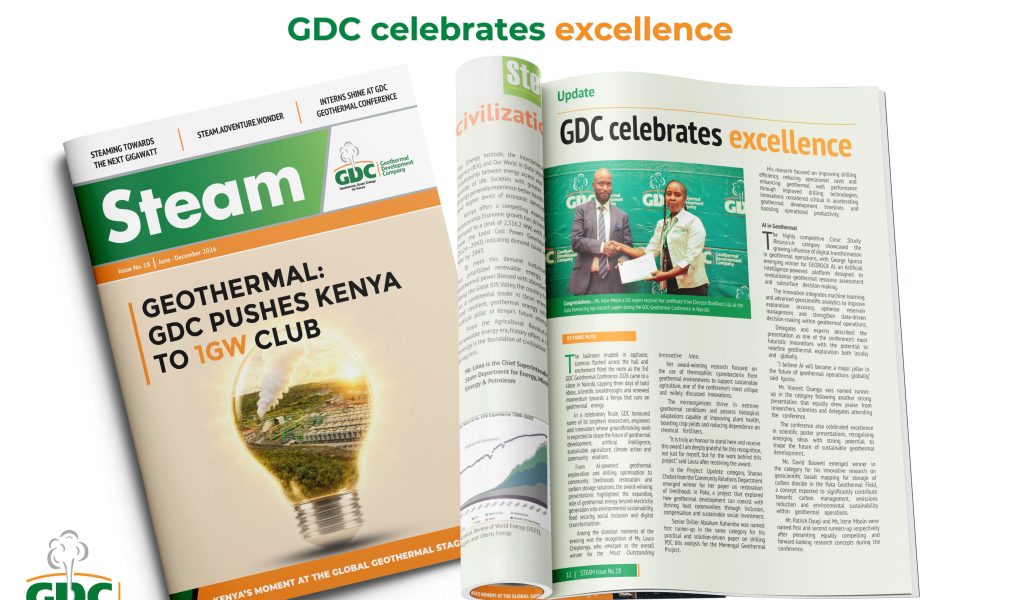
The ballroom erupted in applause, cameras flashed across the hall and excitement filled the room as the 3rd GDC Geothermal Conference 2026 came to a close in Nairobi, capping three days of bold ideas, scientific breakthroughs and renewed momentum towards a Kenya that runs on geothermal energy.
In a celebratory finale, GDC honoured some of its brightest researchers, engineers and innovators whose groundbreaking work is expected to shape the future of geothermal development, artificial intelligence, sustainable agriculture, climate action and community relations.
From AI-powered geothermal exploration and drilling optimisation to community livelihoods restoration and carbon storage solutions, the award-winning presentations highlighted the expanding role of geothermal energy beyond electricity generation into environmental sustainability, food security, social inclusion and digital transformation.
Among the standout moments of the evening was the recognition of Ms. Laura Chepkonga, who emerged as the overall winner for the Most Outstanding Innovative Idea.
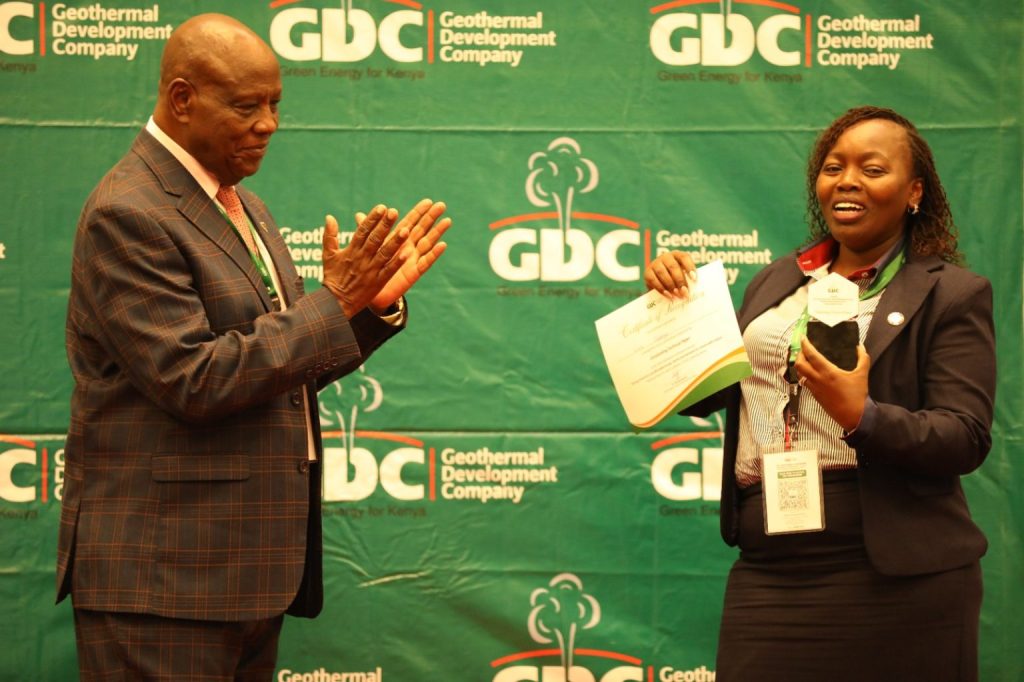
Her award-winning research focused on the use of thermophilic cyanobacteria from geothermal environments to support sustainable agriculture, one of the conference’s most unique and widely discussed innovations.
The microorganisms thrive in extreme geothermal conditions and possess biological adaptations capable of improving plant health, boosting crop yields and reducing dependence on chemical fertilisers.
“It is truly an honour to stand here and receive this award. I am deeply grateful for this recognition, not just for myself, but for the work behind this project,” said Laura after receiving the award.
In the Project Update category, Sharon Chebet from the Community Relations Department emerged winner for her paper on restoration of livelihoods in Paka, a project that explored how geothermal development can coexist with thriving host communities through inclusion, compensation and sustainable social investment.
Senior Driller Abraham Kahemba was named first runner-up in the same category for his practical and solution-driven paper on drilling PDC bits analysis for the Menengai Geothermal Project.
His research focused on improving drilling efficiency, reducing operational costs and enhancing geothermal well performance through improved drilling technologies, innovations considered critical in accelerating geothermal development timelines and boosting operational productivity.
AI in Geothermal
The highly competitive Case Study Research category showcased the growing influence of digital transformation in geothermal operations, with George Igunza emerging winner for GEOROCK AI, an Artificial Intelligence-powered platform designed to revolutionise geothermal resource assessment and subsurface decision-making.
The innovation integrates machine learning and advanced geoscientific analytics to improve exploration accuracy, optimise reservoir management and strengthen data-driven decision-making within geothermal operations.
Delegates and experts described the presentation as one of the conference’s most futuristic innovations with the potential to redefine geothermal exploration both locally and globally.
“I believe AI will become a major pillar in the future of geothermal operations globally,” said Igunza.
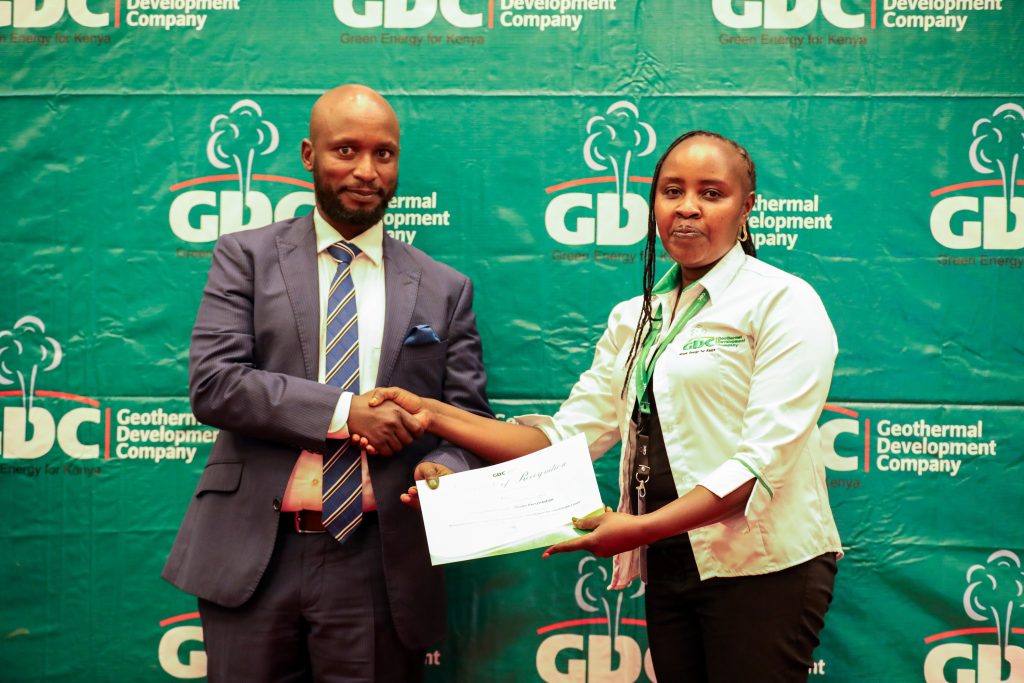
Mr. Vincent Osango was named runner up in the category following another strong presentation that equally drew praise from researchers, scientists and delegates attending the conference.
The conference also celebrated excellence in scientific poster presentations, recognising emerging ideas with strong potential to shape the future of sustainable geothermal development.
Mr. David Basweti emerged winner in the category for his innovative research on geoscientific basalt mapping for storage of carbon dioxide in the Paka Geothermal Field, a concept expected to significantly contribute towards carbon management, emissions reduction and environmental sustainability within geothermal operations.
Mr. Patrick Oyugi and Ms. Irene Mboin were named first and second runners-up respectively after presenting equally compelling and forward-looking research concepts during the conference.
Download your copy of the Steam Magazine Issue 18 here: https://www.gdc.co.ke/wp-content/uploads/2026/06/Steam-Magazine-Issue-18.pdf