
A new regional partnership bringing together Kenya, Tanzania, Uganda and France seeks to expand the geothermal capabilities of East Africa, beyond Kenya, with a strong emphasis on industrialisation, climate resilience and sustainable economic transformation.
The Kenya–Tanzania–Uganda France (KTUF) Geothermal Partnership, supported by Agence Française de Développement (AfD) is implementing a two-year technical assistance programme running from May 2025 to May 2027. The initiative seeks to accelerate geothermal sector development across the region while strengthening collaboration among governments, energy institutions, investors and technical experts.
Unlike many conventional energy programmes focused solely on electricity generation, the KTUF initiative is placing significant attention on “direct use” geothermal applications – the use of geothermal heat in industries such as agriculture, dairy processing, aquaculture, manufacturing, heating and cooling systems. These applications are increasingly being viewed as critical to Africa’s low-carbon industrial future.
East Africa sits on one of the world’s richest geothermal belts along the Great Rift Valley, yet much of the resource remains underdeveloped. Kenya is currently Africa’s leading geothermal producer, largely through projects managed by Geothermal Development Company (GDC) and Kenya Electricity Generating Company (KenGen). Tanzania and Uganda are also seeking to unlock their geothermal potential as part of broader clean energy transitions.
GDC with its storied success in holistic geothermal development, will play a critical role in supporting other countries in the region through expertise and experiential tours.
At the core of the KTUF programme is a comprehensive geothermal market readiness assessment being undertaken by consulting firm MANERGY–Iroko Africa. The study evaluates policy and regulatory frameworks, financing mechanisms, stakeholder ecosystems, market conditions and investment opportunities across participating countries. The aim is to identify pathways for accelerated and sustainable geothermal development.
One of the programme’s most significant recent activities was a technical mission conducted in January 2026 in Menengai, Nakuru County, Kenya. The mission explored the viability of developing a geothermal industrial park centred on direct-use applications. GDC is Africa’s leading light not only on geothermal power development but also in direct uses.
Geothermal Heat
The delegation conducted field assessments with geothermal experts, engaged manufacturers and dairy processors, and held consultations with county leaders who expressed support for the project. The proposed industrial park is expected to leverage geothermal heat to lower industrial energy costs, reduce carbon emissions and attract green investment into manufacturing.
The initiative reflects a broader shift in how geothermal energy is being understood globally -not only as a source of electricity but also as a catalyst for industrial competitiveness and climate smart development.
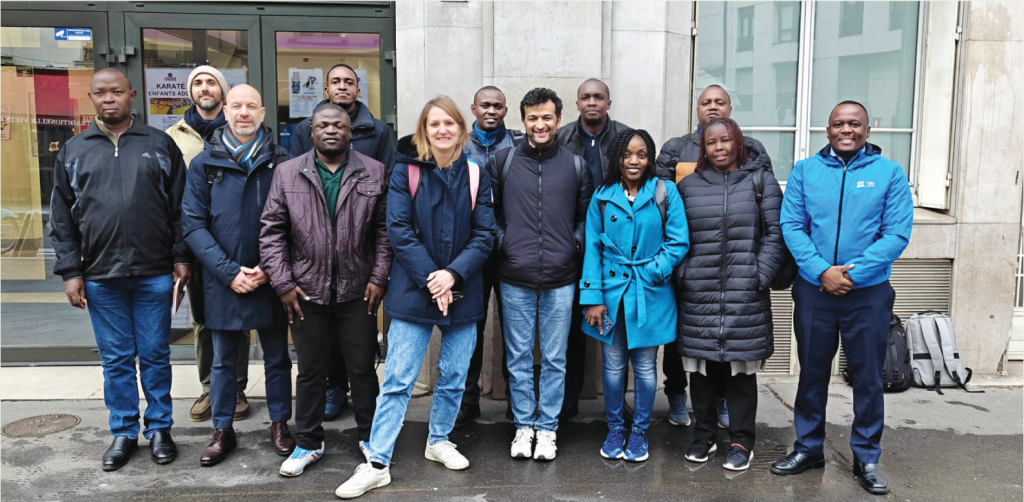
The KTUF partnership has also facilitated international dialogue on innovative financing and risk mitigation models. During meetings in Paris and Kampala, stakeholders discussed how mechanisms used in France – including geothermal risk insurance schemes and dedicated heat funds -could be adapted to African markets where high upfront drilling costs continue to deter investors. As African countries seek cleaner development pathways amid growing energy demand and climate pressures, geothermal energy is increasingly emerging as a strategic resource. Through regional cooperation, technical exchange and targeted investment planning, the KTUF partnership aims to help East Africa transform its vast underground heat potential into a long-term economic opportunity
Mr. Joseph Maina is an Officer Geothermal Resource Centre at GDC
Download your copy of the Steam Magazine Issue 18 here: https://www.gdc.co.ke/wp-content/uploads/2026/06/Steam-Magazine-Issue-18.pdf


