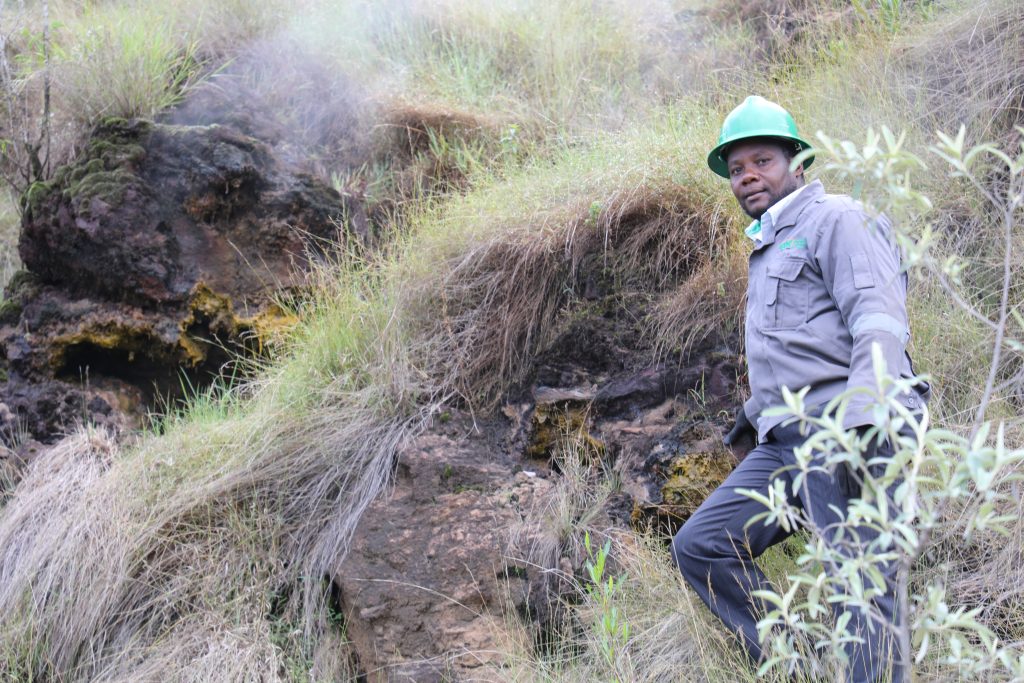
As the world scrambles for oil, gas, and rare minerals, John Mwiti spends his days chasing steam.
Not the kind that disappears from a boiling kettle, but the powerful white plumes roaring out of the earth along Kenya’s Great Rift Valley. Steam, hot enough to light cities, dry grains, hatch chicks, warm greenhouses, and perhaps reshape livelihoods across rural Kenya.
Where many see heat and barren volcanic land, Mwiti sees possibility.
“A sight of hot water or anything above 35 degrees Celsius thrills my heart,” he says with a grin that carries the excitement of a child discovering fire for the first time.
For the Senior Technician in Geothermal Resource Management at the Geothermal Development Company (GDC), geothermal energy is more than electricity generation. It is a tool for transforming communities.
Born in 1986 in Kionyo village, Imenti South, Meru County, Mwiti grew up in a Kenya where electricity was unreliable and, in many rural homes, entirely out of reach. Like many children of his generation, he understood the value of power not as a convenience, but as a distant luxury.
Years later, he would come to realize that beneath Kenya’s volcanic landscape lay an immense and largely untapped source of energy quietly simmering beneath the earth’s crust.The first time he witnessed a geyser erupt, he did not recoil from the violent hiss of steam and boiling water. He stepped closer.
He stretched out his hand toward the mist.
And something changed.
That encounter became the beginning of an obsession that would define his career.
Long before geothermal became his profession, Mwiti was already drawn to community transformation. In Meru, he organized tree-planting drives and worked with vulnerable children while nurturing ideas about how energy could power industries and create opportunities in rural Kenya.
By 2023, he had spent more than a decade working in geothermal fields — profiling wells, monitoring steam systems, and maintaining geothermal infrastructure. He understood geothermal reservoirs almost instinctively, the way a shepherd understands his flock.
But one article in GDC’s internal communication changed everything.
To many employees, it was a routine corporate piece. To Mwiti, it was an invitation.
One question immediately consumed him: “How can this steam leave the power plant and enter the community?”
That question would send him across the Rift Valley — from Eburru to Ol Rongai, from Menengai to Paka — evangelizing what the geothermal sector calls “direct use”: harnessing geothermal heat for agriculture, food processing, aquaculture, tourism, and industrial applications without first converting it into electricity.
Armed not with large budgets or blueprints, but conviction and relentless curiosity, Mwiti began engaging universities, farmers, researchers, and communities.
In Ol Rongai, geothermal steam is now being explored for incubating and brooding chicks through community initiatives he helped champion.
At Mount Kenya University, research is underway on cricket farming using geothermal heat as part of efforts to reduce the cost of animal feed production.
Near Menengai geothermal field, Kabarak University students and lecturers are collaborating with GDC and surrounding communities to explore geothermal-powered poultry farming.
At the Rift Valley Institute of Science and Technology, naturally heated wells reaching temperatures of 60 degrees Celsius are being considered for commercialization following support secured through the Geothermal Risk Mitigation Facility (GRMF), for which he played a key role in securing.
For Mwiti, these are not isolated experiments. They are pieces of a larger dream.
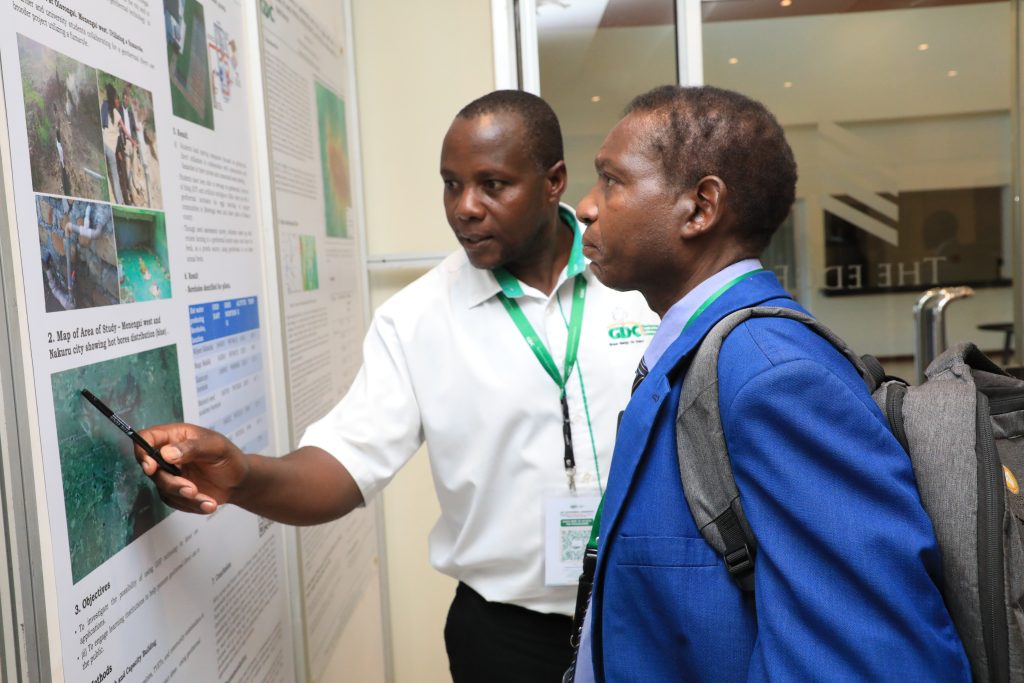
At the second and third GDC Geothermal Conferences, he presented winning papers focused on geothermal innovation and direct use applications. At the 2026 conference held in Nairobi, his research examined the possibility of utilizing geothermal heat available within Nakuru for direct industrial and community applications.
His inspiration stretches thousands of kilometres beyond Kenya.
Through GDC exposure programmes, Mwiti studied Iceland’s geothermal success story — a country where geothermal heat warms homes, supports agriculture, and powers industries year round.
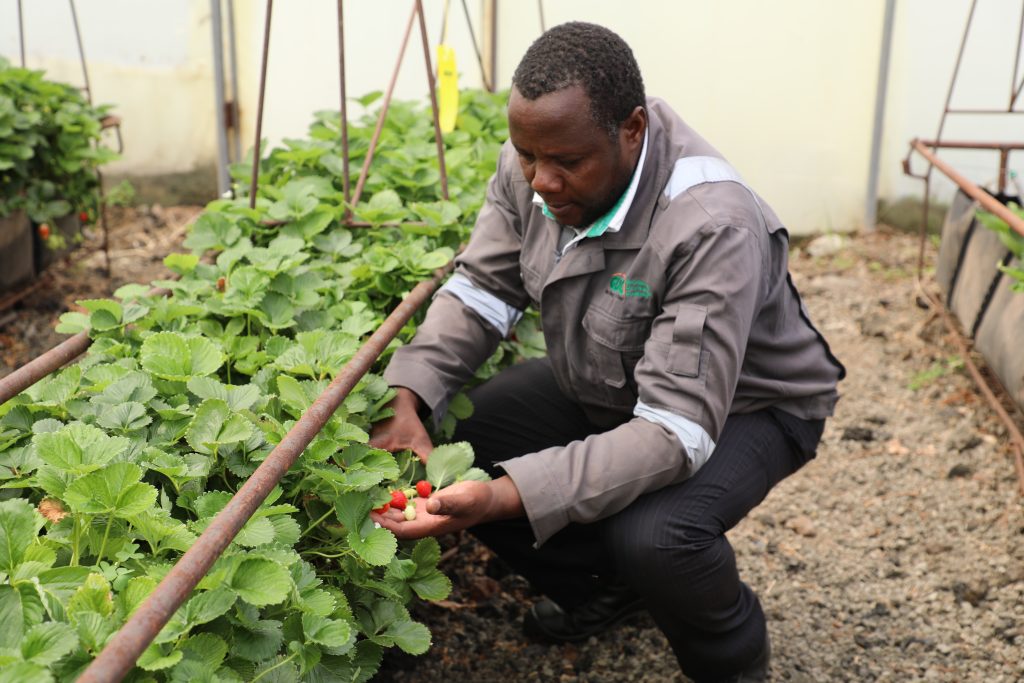
One farmer changed the Iceland story,” he says. “Today, hotels are heated using steam. It can be done in Kenya too. It can be done in Nakuru.”
He points to Kenya’s own examples — the geysers of Lake Bogoria and the geothermal spa experiences in Olkaria — as proof that geothermal direct use can support tourism, agribusiness, manufacturing, and employment creation.
Yet away from geothermal wells and community projects, Mwiti remains grounded.
He sings in a choir he once chaired, helping the group rise to national recognition and earn space in Presidential Music Festival programmes.
Colleagues describe him as relentless, curious, and impossible to ignore once he begins speaking about steam.
To some, his ideas sound overly ambitious.
To him, they are inevitable.
“For me, it is geothermal, water, and how we can use the expertise we have at GDC and beyond to change the Kenyan story,” he says. “It’s our resource. We must develop it.”
And so, while others chase gold beneath the earth, John Mwiti continues chasing geysers – convinced that Kenya’s hottest resource is not hidden underground, but inside the minds bold enough to imagine a different future.
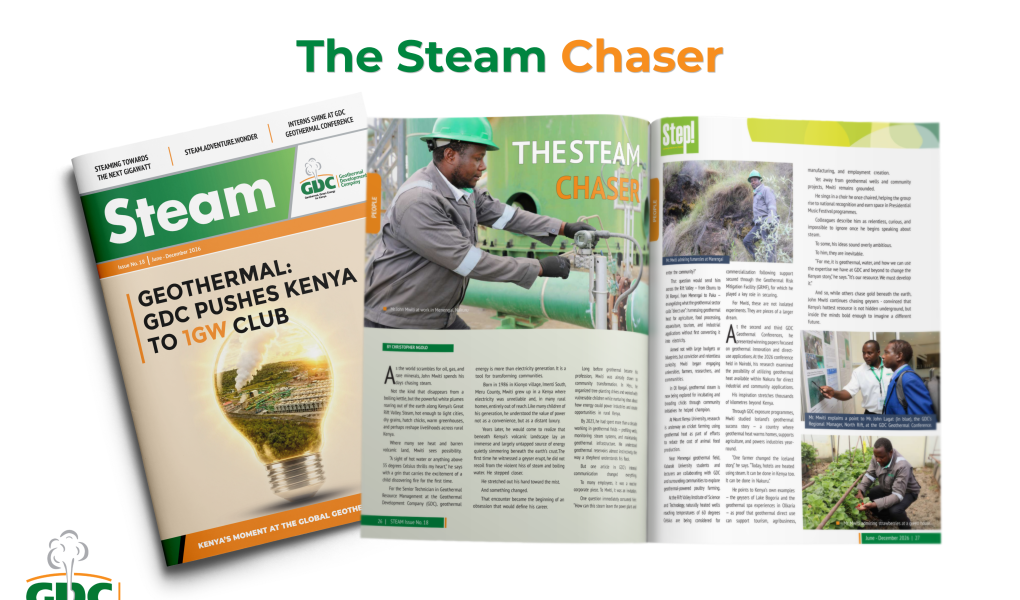
Download your copy of the Steam Magazine Issue 18 here: https://www.gdc.co.ke/wp-content/uploads/2026/06/Steam-Magazine-Issue-18.pdf